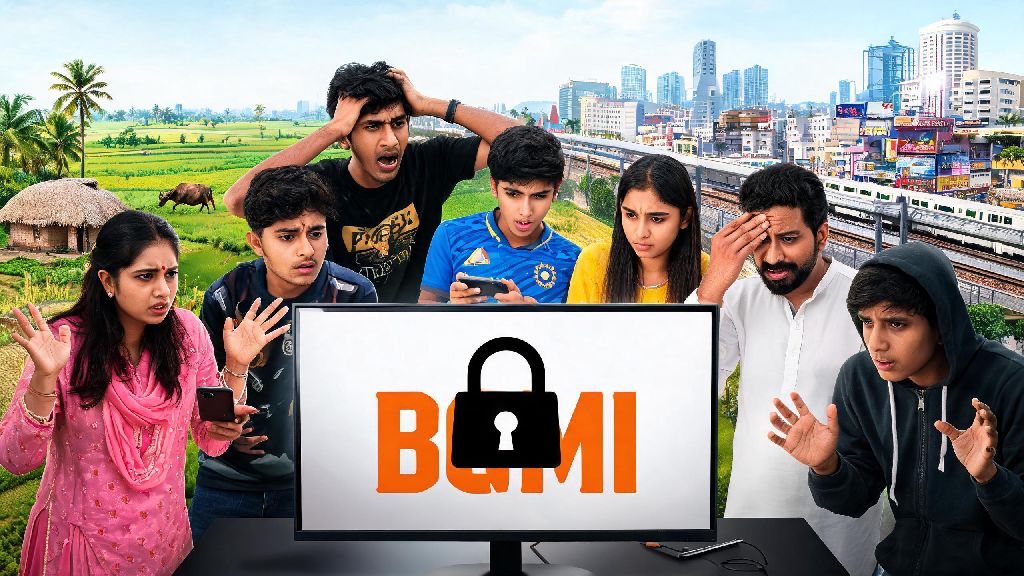
If you’re a mobile battle royale fan based in India, you’ve almost certainly encountered the frustrating login error or missing store listing for BGMI at some point over the last few years. The game, which was marketed as an India-specific alternative to the previously banned PUBG Mobile, amassed more than 130 million registered users in just 10 months after its 2021 launch, becoming a cultural staple for casual and competitive gamers alike. If you’ve been confused about the back-and-forth restrictions, you’re not alone. We’re breaking down all the context, official updates, and real-world implications to explain why BGMI is banned in India, and what the current status means for regular players.
Core Reasons Why BGMI Is Banned in India
Most people assume the ban came out of nowhere, but the government’s decision was tied to months of unaddressed compliance issues that started long before the game was pulled from app stores. The first and most cited reason is national security and data privacy risks that were flagged by India’s Ministry of Electronics and Information Technology (MeitY) in early 2022. Officials found that sensitive user data, including location information, device identifiers, and contact lists, were being regularly transferred to servers based in China, despite Krafton’s public promises that all Indian user data would be stored locally on servers in India and Singapore.
Another key factor is the game’s repeated failure to adhere to content moderation rules set by the Indian government. The government received thousands of complaints from parents and child welfare organizations about BGMI’s addictive gameplay, exposure to violent content for underage users, and reports of in-game gambling features that let users spend real money on random loot box rewards with no age verification checks. Unlike many other popular mobile games in India, BGMI did not have a built-in screen time limit for users under 18, and did not require government-approved KYC for in-game purchases.
The third core reason is tied to the original 2020 PUBG Mobile ban. When Krafton launched BGMI as a separate India-only title, it signed a formal agreement with the Indian government that it would cut all ties with Tencent, the Chinese tech giant that previously held distribution rights for PUBG Mobile in the region. But government audits found that Tencent still held a partial stake in the game’s backend infrastructure, and was still receiving a share of revenue from Indian BGMI purchases, which violated the terms of the earlier ban exemption.
How the BGMI Ban Rolled Out for Players Across India
The ban didn’t happen all at once, which left a lot of players confused about what was allowed and what wasn’t for months. First, in July 2022, MeitY issued an official order to Google and Apple to remove BGMI from the Play Store and App Store, citing violations of Section 69A of the Information Technology Act, which lets the government block access to apps that pose a risk to national security. At this point, users who already had the game installed could still play normally, which led many to assume the ban was only for new downloads.
A few months later, Krafton disabled server access for all Indian users, even those who had the game already downloaded on their devices. I remember my roommate, who competed in local BGMI esports tournaments, lost access mid-practice session for a regional qualifier that had a ₹5 lakh prize pool. The sudden server shutdown affected over 100 million active monthly users overnight, and put thousands of aspiring esports players’ careers on hold with no advance warning.
There was a brief glimmer of hope in 2023, when Krafton announced it had resolved most of the compliance issues and was in talks with the Indian government for a conditional relaunch. But as of the latest updates, the game is still not available for legal download or play in India, and MeitY has not shared any official timeline for a potential return. Many players have tried sideloading modified APKs of the game to keep playing, but these versions often come with malware risks, and Krafton has been actively banning accounts that access the game from Indian IP addresses.
Common Myths About the BGMI Ban, Debunked
With so much conflicting information shared on social media and gaming forums, it’s easy to fall for false claims about the ban. We’ve rounded up the most common myths we’ve seen, and cross-checked them against official government statements and updates from Krafton:
One of the most dangerous myths we’ve seen spread online is that there are no legal penalties for playing a banned game. That’s not true. Under Section 69A of the IT Act, accessing a banned app can carry fines of up to ₹1 lakh and even jail time for repeat offenders, though most regular casual players have only faced account bans so far. It’s not worth risking your personal data or legal trouble just to play a mobile game, no matter how much you love it.
What the BGMI Ban Means for the Future of Indian Gaming
The BGMI ban wasn’t just a one-off decision for a single game—it set a clear precedent for all foreign game developers looking to enter the fast-growing Indian gaming market. For years, many global companies treated India as a secondary market, with little effort to comply with local data laws or content moderation rules. The BGMI ban sent a clear message that if you want access to India’s 500 million+ mobile gamers, you have to prioritize local compliance first.
Since the ban, the Indian mobile gaming industry has seen a huge surge in support for homegrown battle royale titles, many of which already meet all government compliance rules and are built specifically for Indian audiences. Per latest industry reports, local battle royale games saw a 37% increase in monthly active users in the 12 months after the BGMI ban, as players shifted to legal alternatives that offered similar gameplay without the security risks.
The ban also pushed the Indian government to speed up work on its national gaming policy, which is set to roll out in the near future. The policy will set clear, uniform rules for data localization, age verification, in-game purchase limits, and esports regulation, which will make it easier for both local and foreign developers to operate in the market without the risk of sudden bans. For players, that means more stable access to their favorite games, and better protection for their personal data long term.
At the end of the day, the answer to why BGMI is banned in India boils down to unmet compliance requirements and valid national security concerns that Krafton failed to address for months after they were first flagged. For millions of players who built friendships, competitive careers, and years of progress on their BGMI accounts, the ban was a disappointing, sudden change that no one wanted. But it also pushed the entire Indian gaming industry to become more secure, more locally focused, and more accountable to players. If you’re holding out for a BGMI relaunch, the best thing you can do is follow official updates from Krafton and MeitY, and avoid unlicensed versions of the game that put your data and accounts at risk.